Announcement
Unlocking Growth: How the Latest AI Optimization Trends Can Transform Your SEO Strategy
written by:
William gyltman

In a landscape where search algorithms evolve daily, staying ahead means leveraging AI not as a novelty but as a core engine of optimization. Marketers and SEO managers who ignore the rapid advances in AI risk losing visibility to competitors who automate insights, predict intent, and fine‑tune content at scale.
Rankad’s mission is to turn these emerging capabilities into practical, revenue‑driving actions. This guide distills the most impactful AI optimization trends, outlines the criteria you should use to evaluate tools, and delivers a clear implementation roadmap you can start using this week.
Why AI Optimization Is No Longer Optional
Problem framing: For mid‑size e‑commerce brands, the manual keyword research and content audit process consumes weeks of analyst time, yet still yields only incremental traffic gains. The gap between effort and outcome is widening as competitors adopt AI‑driven automation.
Decision criteria: Evaluate solutions based on data freshness (real‑time SERP signals), integration depth (CMS, analytics, paid search), and scalability (ability to handle thousands of pages without linear cost increases). Trade‑offs often involve balancing a tool’s breadth of features against its learning curve.
Actionable guidance: 1) Audit your current workflow to identify bottlenecks—e.g., keyword clustering, meta tag generation, or performance reporting. 2) Map each bottleneck to an AI capability (natural language generation, clustering algorithms, predictive analytics). 3) Pilot a lightweight AI module on a single category page to measure time saved and ranking impact.
What good looks like: A retailer using an AI‑powered clustering tool reduces the time to generate a 500‑keyword list from three days to under two hours, while the new clusters align with emerging long‑tail queries, resulting in a 12% lift in organic traffic within a month.
Emerging Trends Shaping AI‑Driven SEO in 2024
Problem framing: Traditional keyword‑centric SEO is being eclipsed by intent‑first strategies, yet many teams lack a framework to capture and act on user intent at scale.
Decision criteria: Prioritize trends that deliver measurable ROI—such as AI‑generated intent clusters, predictive SERP modeling, and automated content gap analysis. Consider the vendor’s data privacy posture and the ability to export raw insights for internal validation.
Actionable guidance: • Intent clustering: Feed your top 10,000 organic queries into an unsupervised learning model (e.g., Rankad’s intent engine) to surface high‑value intent groups. • Predictive SERP modeling: Use AI to simulate how a new piece of content will rank against current top results before publishing. • Content gap automation: Set up a weekly AI scan that flags missing topics compared to competitor top‑10 pages.
What good looks like: A B2B SaaS company adopts AI intent clustering, discovers a previously untapped “remote workforce compliance” cluster, creates three targeted landing pages, and sees a 25% increase in qualified leads from organic search within six weeks.
Choosing the Right AI Tools for Your Workflow
Problem framing: The market is flooded with AI SEO platforms, each promising automation, but buying without a fit‑check leads to underutilized licenses and fragmented data.
Decision criteria: Assess tools on three pillars—Integration (does it plug into your existing CMS, Google Search Console, and data warehouse?), Customization (can you train models on your brand’s language and product taxonomy?), and Support (does the vendor provide onboarding, best‑practice guides, and a community of power users?). Weigh cost against expected lift in efficiency and traffic.
Actionable guidance: 1) Create a scoring matrix with the three pillars weighted to your priorities (e.g., Integration 40%, Customization 35%, Support 25%). 2) Shortlist three vendors and run a 14‑day sandbox test on a representative page set. 3) Document time saved per task and any ranking changes; use these metrics to calculate a projected ROI.
What good looks like: After scoring, a retailer selects Rankad because it integrates directly with Shopify, allows custom taxonomy training, and offers a dedicated success manager. In the pilot, meta‑description generation time drops from 30 minutes per page to under a minute, and the first batch of AI‑enhanced pages climbs an average of three SERP positions within two weeks.
Implementing a Continuous AI Optimization Loop
Problem framing: One‑off AI projects deliver spikes in performance but quickly decay as search trends shift and content ages.
Decision criteria: A sustainable loop requires real‑time data ingestion, automated hypothesis testing, and clear KPI dashboards. Trade‑offs involve the complexity of orchestration versus the speed of insight delivery.
Actionable guidance: • Set up automated data pipelines that pull SERP rankings, click‑through rates, and user engagement metrics nightly. • Use AI to generate weekly “optimization hypotheses” (e.g., adjust title length, add schema, rewrite intro). • Deploy changes via a CI/CD‑like process: test on a staging URL, monitor a 48‑hour performance window, then push to production if the hypothesis meets a predefined lift threshold (e.g., +5% CTR).
What good looks like: An online publisher implements Rankad’s continuous loop, resulting in a steady 3% month‑over‑month increase in organic traffic. The system automatically flags underperforming articles, suggests concise meta titles, and pushes approved changes without human intervention, freeing the editorial team to focus on new content creation.
Conclusion
AI optimization is moving from experimental to essential, and the trends highlighted here are already reshaping how successful brands capture demand. By framing the problem, applying clear decision criteria, and following a step‑by‑step implementation plan, you can turn AI from a buzzword into a measurable growth engine.
Rankad provides the platform, expertise, and support to embed these trends into your daily workflow, ensuring you stay ahead of algorithm updates and competitor moves. Start with a focused pilot, scale the learnings, and embed a continuous optimization loop to sustain long‑term SEO performance.
You might want to read
AIO
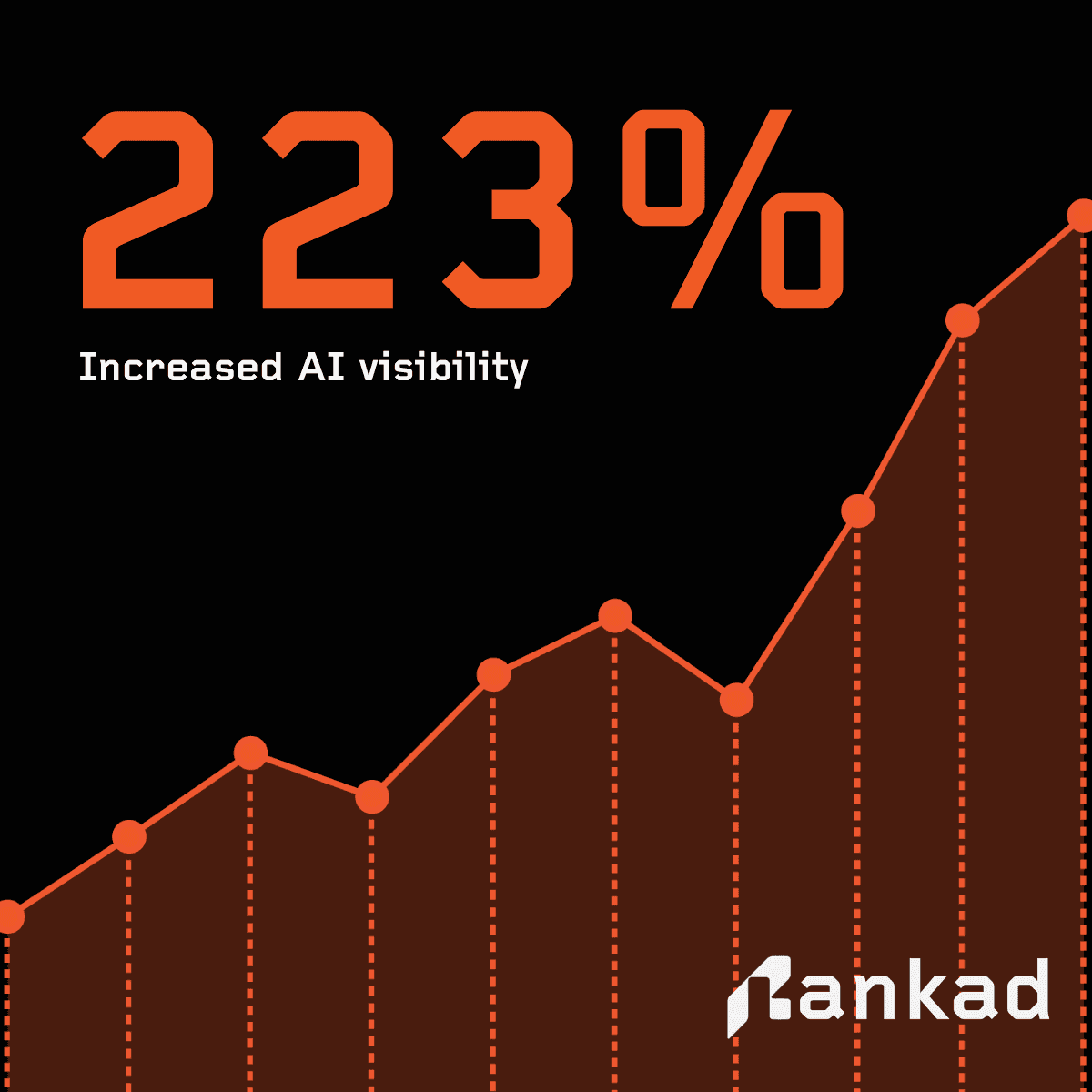
AI Search Optimization: How Rankad Helped 50+ Brands Achieve 223% Visibility Growth in 2026
Rankad.ai analyzed 50+ brands to uncover why most start with zero AI search visibility and how optimization can increase visibility by 223%. Learn actionable strategies for e-commerce, SaaS, and more.

AIO
How AI Chooses Brands: Best Practices for AI Search Optimization
Learn how AI systems decide which brands to mention in answers and recommendations, and how AI SEO, AEO, GEO, and AIO influence visibility.

Digital Marketing
AI SEO vs AEO vs GEO vs AIO: Key Differences and Best Practices for 2026
AI SEO, AEO, GEO, and AIO all impact how brands appear in AI answers. Learn the differences and why modern visibility needs all four.
free forever - no credit card needed