Announcement
How to Pinpoint and Fix AI‑Driven Search Visibility Drops Using Rankad
written by:
William gyltman
If you’ve ever watched a sudden dip in AI‑generated search rankings, you know the frustration of not knowing why traffic vanished overnight. For marketers who rely on AI‑powered SERP features—such as ChatGPT snippets, answer boxes, or AI‑enhanced product listings—visibility can feel like a moving target. The problem isn’t just lost clicks; it’s the risk of falling behind competitors who are already adapting to the new algorithmic landscape.
Rankad offers a focused, AI‑aware analytics suite that surfaces the exact on‑page factors causing those drops. In this guide, we walk you through a practical workflow: from configuring Rankad alerts to interpreting the data, prioritizing fixes, and confirming that your rankings are back on track. By the end, you’ll have a repeatable process that turns a mysterious dip into a clear action plan.
1. Understanding Why AI Visibility Can Slip Overnight
Problem framing: AI‑driven SERP features are powered by a blend of traditional ranking signals and real‑time content relevance models. When a model update occurs, pages that previously satisfied the AI’s context may suddenly be deemed less useful, causing a sharp visibility drop.
Decision criteria: You need to decide whether the issue is technical (crawlability, schema), content‑quality (depth, freshness), or contextual relevance (keyword intent mismatch). Trade‑offs include the time required to implement a technical fix versus the potential impact of a content overhaul.
Actionable guidance: Start by cataloguing the pages that experienced the biggest traffic loss. Use Rankad’s “Visibility Change” report to isolate the exact dates of the dip and cross‑reference those dates with known AI model updates announced by major search platforms.
What good looks like: A marketer discovers that three product pages lost 40% of AI‑generated impressions on the same day a search engine announced a “knowledge‑graph refresh.” The timing clue narrows the investigation to schema and structured data, saving weeks of unnecessary content rewrites.
2. Setting Up Rankad for Real‑Time Monitoring
Problem framing: Without continuous visibility data, you’re reacting after the damage is done. Real‑time alerts give you the earliest warning that an AI feature has changed.
Decision criteria: Choose between a high‑frequency (hourly) alert that may generate noise and a daily summary that could miss rapid fluctuations. Consider the volume of pages you manage and the resources you have for immediate investigation.
Actionable guidance: In Rankad, navigate to the “Alerts” dashboard and create a custom rule: “When AI‑generated impressions drop >15% in 24 hours, send Slack/email notification.” Then, add the most critical landing pages to a “Priority Watchlist” so they are monitored with the highest frequency.
What good looks like: After setting up the alert, a marketer receives an instant Slack message the moment a new AI snippet format is rolled out, allowing the team to begin a root‑cause analysis within minutes rather than hours.
3. Analyzing the Data: Key Signals of a Drop
Problem framing: A raw impression dip tells you *that* something changed, but not *why*.
Decision criteria: Focus on three data pillars—technical health, content relevance, and competitive landscape. Prioritize the pillar that shows the most deviation from baseline.
Actionable guidance: Use Rankad’s “Page Health” view to check for crawl errors, missing structured data, or slow page speed that may affect AI rendering. Next, examine the “Keyword Intent Match” score to see if the page’s topical depth aligns with the AI’s new understanding of user queries. Finally, run a “Competitor Gap” analysis to see if rivals have introduced richer media or updated schema that now outrank you.
What good looks like: A page’s structured data for FAQ schema is missing after a recent CMS migration. Rankad flags the schema error, the intent match score drops 20 points, and a competitor’s page with complete FAQ markup now appears in the AI answer box. The marketer knows the exact fix: re‑implement the FAQ schema.
4. Prioritizing Fixes: From Technical to Content
Problem framing: Not every issue has the same ROI. Technical fixes are often quick wins, while content rewrites can be resource‑intensive.
Decision criteria: Rank fixes by impact (estimated visibility gain) and effort (person‑hours). Use Rankad’s “Fix Impact Estimator” which scores each recommendation on a 1‑5 scale based on historical recovery patterns.
Actionable guidance: Create a triage board with three columns—High Impact/Low Effort, High Impact/High Effort, Low Impact. Populate the board with items such as “Add missing FAQ schema” (high/low), “Expand product description to 1,200 words with LSI terms” (high/high), and “Update image alt text for accessibility” (low/low). Assign owners and set 48‑hour deadlines for the high‑impact/low‑effort items.
What good looks like: Within two days, the team adds the missing FAQ schema and sees a 12% lift in AI impressions. The larger content expansion is scheduled for the next sprint, with a clear KPI of a 25% visibility increase after publication.
5. Implementing Changes and Verifying Recovery
Problem framing: After you’ve made adjustments, you need proof that the visibility dip is resolved and that the fix didn’t introduce new issues.
Decision criteria: Choose verification windows—short‑term (24‑48 hours) for technical fixes and medium‑term (2‑4 weeks) for content upgrades. Also decide whether to rely solely on Rankad metrics or supplement with Google Search Console data.
Actionable guidance: In Rankad, set a “Post‑Fix Monitoring” period for each updated page. Track the AI‑generated impression trend, the “Visibility Score,” and any new crawl warnings. If the metrics plateau or dip again, revisit the decision matrix in Section 4. Document the outcome in a shared “Visibility Recovery Log” to build institutional knowledge.
What good looks like: After re‑adding FAQ schema, the page’s AI impression count climbs back to 95% of its pre‑drop level within 48 hours. The marketer logs the recovery, notes the fix, and adds the schema check to the regular site audit checklist.
Conclusion
Diagnosing AI‑driven visibility drops doesn’t have to be a guessing game. By leveraging Rankad’s real‑time alerts, health diagnostics, and impact‑based fix prioritization, you can turn a sudden dip into a structured, data‑backed response. The workflow—monitor, analyze, prioritize, implement, and verify—creates a repeatable loop that keeps your pages competitive as AI models evolve. Remember, the fastest wins often come from fixing technical gaps, while deeper content upgrades secure long‑term dominance in AI‑enhanced SERPs.
Adopt this process today, and you’ll spend less time scrambling after a drop and more time proactively shaping the content and schema that AI searches favor. The result is steadier traffic, higher conversion potential, and a clear roadmap for future AI algorithm changes.
You might want to read
AIO
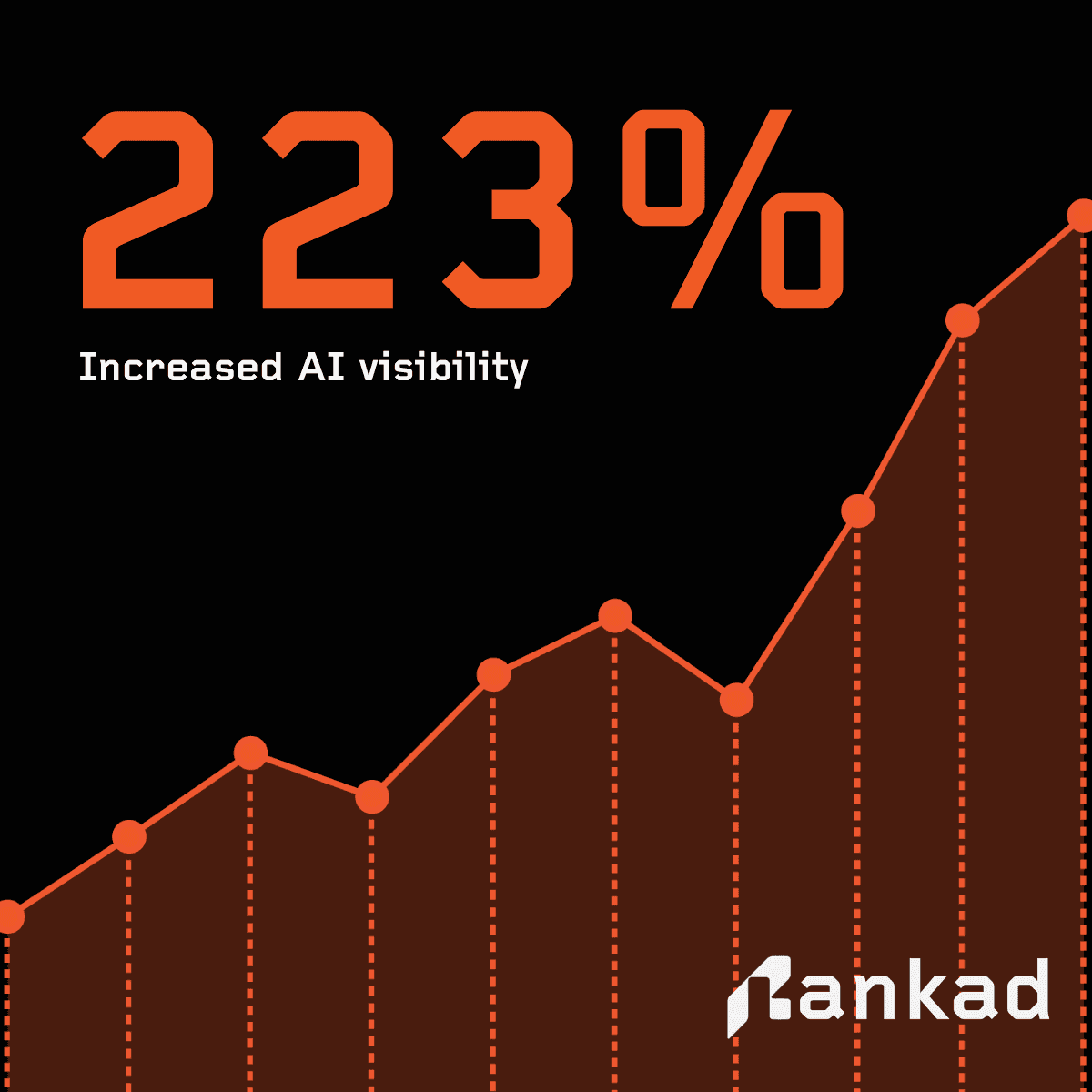
AI Search Optimization: How Rankad Helped 50+ Brands Achieve 223% Visibility Growth in 2026
Rankad.ai analyzed 50+ brands to uncover why most start with zero AI search visibility and how optimization can increase visibility by 223%. Learn actionable strategies for e-commerce, SaaS, and more.

AIO
How AI Chooses Brands: Best Practices for AI Search Optimization
Learn how AI systems decide which brands to mention in answers and recommendations, and how AI SEO, AEO, GEO, and AIO influence visibility.

Digital Marketing
AI SEO vs AEO vs GEO vs AIO: Key Differences and Best Practices for 2026
AI SEO, AEO, GEO, and AIO all impact how brands appear in AI answers. Learn the differences and why modern visibility needs all four.
free forever - no credit card needed