Announcement
How to Master AI Search Optimization for Revenue Growth
written by:
William gyltman
How to Master AI Search Optimization for Revenue Growth
AI search optimization is a strategic approach to ensure your brand gets visibility, trust, and recommendations from AI systems like ChatGPT and Gemini. Unlike traditional SEO, which focuses on keyword rankings and backlinks, AI search optimization emphasizes trust signals, contextual relevance, and entity recognition. These factors are critical because they determine whether your brand appears as a recommended option when users engage with conversational AI tools. For example, if a user asks, “What is the best project management software for startups?” AI systems prioritize brands with strong trust signals. By aligning with these AI requirements, businesses can position themselves as trusted resources during pivotal decision-making moments, reshaping how they connect with customers and turning AI-driven interactions into direct revenue opportunities.
AI search optimization helps brands gain visibility in conversational AI systems like ChatGPT.
It focuses on trust signals, citations, and brand relevance rather than keyword rankings.
Rankad simplifies the process by automating AI search optimization.
What is AI search optimization?
AI search optimization is the practice of improving how AI systems like ChatGPT, Gemini, and Perplexity evaluate and recommend your brand when users seek answers or make purchasing decisions. Unlike traditional SEO, which focuses on ranking web pages, AI search optimization zeroes in on trust signals, structured data, and conversational intent to ensure your brand is recognized as credible and relevant. For instance, structured data like schema markup helps AI systems understand your brand’s offerings clearly, while verified citations reassure these systems of your brand's authority. This practice requires businesses to adapt their strategies to align with how AI models process and prioritize information, ensuring they remain visible in the ever-evolving digital landscape.
Unlike traditional SEO, which relies heavily on keyword optimization and backlink strategies, AI search optimization focuses on how AI systems interpret contextual relevance and recommend brands directly to users. Consider this example: instead of competing for a top spot on a Google search results page for "affordable CRM tools," your brand must now ensure it’s the one recommended by ChatGPT when a user asks, "What’s the best CRM for small businesses?" This shift requires businesses to prioritize proactive measures that establish trust and relevance in AI-driven conversational contexts, emphasizing the importance of verified citations and clear metadata.
To succeed in AI search optimization, brands must adopt a mindset that prioritizes being chosen at critical moments of user decision-making. This involves crafting structured content that AI systems can easily parse and categorize. For example, schema markup can highlight product features or service details that are most likely to answer user queries. Additionally, focusing on trust-building activities like fostering positive customer sentiment and securing verifiable citations ensures that AI systems rank your brand highly. The payoff is substantial: when AI tools recommend your brand over competitors, the likelihood of converting a user into a loyal customer increases dramatically, creating a direct link between AI search visibility and revenue growth.
How does AI search differ from traditional SEO?
AI search differs from traditional SEO in its objectives and evaluation criteria. While traditional SEO aims to rank web pages based on keywords, backlinks, and user engagement metrics, AI search focuses on recommending entities—brands, products, or services—during conversational interactions. For example, rather than optimizing for a search term like "best ergonomic chairs," AI search ensures your brand is the trusted recommendation when a user asks, "What is the best chair for back pain under $300?" This shift places greater emphasis on trust signals, verified citations, and contextual understanding rather than simply ranking for popular keywords.
Traditional SEO relies on metrics like click-through rates and bounce rates to gauge success, but AI search evaluates brand relevance through different lenses. Entity coherence—how well your brand is understood as an entity—plays a pivotal role, alongside sentiment analysis and structured data. For instance, AI models like ChatGPT prioritize content that succinctly answers queries and is supported by credible sources. This approach requires brands to rethink their SEO strategies, shifting focus toward content quality and data reliability to align with AI systems’ decision-making processes.
Another key difference is the dynamic nature of AI search. Traditional SEO often involves periodic updates to maintain rankings, but AI search necessitates continuous adaptation to evolving AI models and user behaviors. For example, if an AI system updates its algorithm to prioritize sentiment analysis more heavily, brands must quickly adjust by improving their reputation management strategies. This ongoing effort to align with shifting AI priorities ensures that your brand remains visible and competitive in a rapidly changing digital environment.
What are the key differences?
Traditional SEO ranks pages; AI search recommends brands.
SEO relies on keywords; AI search prioritizes trust and intent.
AI search emphasizes structured data and verified citations.
How can brands optimize for AI search?
Brands can optimize for AI search by focusing on three core areas: trust signals, structured content, and alignment with conversational intent. Trust signals, such as verified citations and positive customer sentiment, ensure that AI systems recognize your brand as credible and relevant. For example, securing mentions in authoritative publications can significantly boost your brand’s trustworthiness. Structured content, including metadata and schema markup, helps AI models quickly understand and categorize your brand’s information. Lastly, aligning your strategy with conversational intent ensures that your brand is recommended when users ask AI tools questions like "What’s the best accounting software for startups?" or "Which CRM works best for small teams?"
The first step in optimizing for AI search is to analyze how AI tools currently perceive and recommend your brand. Platforms like Rankad allow you to identify gaps in visibility, trust signals, and structured data. For instance, if your brand is not appearing in AI-driven responses to high-intent queries, you’ll know where to focus your efforts. These insights can inform a targeted optimization roadmap, helping you prioritize areas like metadata improvements, securing authoritative citations, and addressing negative sentiment that might hinder trust. This data-driven approach ensures that your efforts deliver measurable results.
Consistency is crucial in AI search optimization. AI models evolve rapidly, often introducing new criteria for evaluating and recommending brands. To stay ahead, businesses must regularly update their content, monitor AI-generated responses, and adapt their strategies. For example, if sentiment analysis becomes a more prominent factor in AI algorithms, brands will need to place greater emphasis on managing online reviews and fostering positive customer interactions. By staying proactive and adaptable, businesses can ensure they remain competitive in a landscape where visibility depends on trustworthiness and contextual relevance.
What actionable steps can you take?
Analyze how AI tools currently recommend your brand.
Optimize structured data and citations for trust signals.
Monitor AI-driven recommendations and adjust strategies accordingly.
Why are trust signals critical for AI search?
Trust signals are essential because they form the foundation of how AI systems evaluate and recommend brands. These signals include verified citations, customer sentiment, and entity authority, all of which contribute to your brand’s credibility in the eyes of AI models. For example, a lack of verified citations can lead AI systems to overlook your brand, even if your website ranks well in traditional SEO. Trust signals act as a bridge between your brand and AI systems, ensuring that you are recognized as a credible option when users seek recommendations. This credibility not only improves visibility but also enhances user trust, leading to higher conversion rates.
AI models like ChatGPT rely heavily on trust signals to provide accurate and reliable recommendations. If your brand lacks structured data or credible sources, it risks being excluded from AI responses, regardless of its online presence elsewhere. Consider a scenario where a user asks ChatGPT, "What’s the best project management software for startups?" Without strong trust signals, your brand may never be considered, even if it offers a superior product. This highlights the importance of building a robust foundation of credibility, which can be achieved through strategies like securing authoritative citations and managing customer sentiment effectively.
To enhance trust signals, brands should focus on creating high-quality, authoritative content supported by credible sources. Structured data, such as schema markup, helps AI systems quickly identify and categorize your brand’s information. Additionally, managing customer sentiment by encouraging positive reviews and addressing negative feedback strengthens your credibility. These trust-building efforts not only improve your visibility in AI-driven environments but also foster long-term customer loyalty, ensuring sustained benefits for your business.
How can you enhance trust signals?
Use structured data to highlight key information.
Secure verified citations from credible sources.
Maintain positive customer sentiment through active review management.
What role does Rankad play in AI search optimization?
Rankad serves as a comprehensive platform designed to simplify and automate the complex process of AI search optimization. By identifying gaps in trust signals, structured content, and visibility, Rankad provides actionable insights that help businesses focus on strategic growth rather than manual adjustments. For instance, if your brand is losing visibility in AI responses to high-intent queries, Rankad highlights the specific areas needing improvement, such as missing citations or outdated metadata, and offers solutions to address them effectively. This hands-on guidance allows businesses to allocate resources more efficiently while achieving measurable improvements in visibility.
Key features of Rankad include prompt tracking, autonomous optimization, and dynamic insights. The platform doesn’t just analyze how AI systems perceive your brand—it implements the necessary changes automatically. For example, if Rankad detects incomplete structured data, it updates the metadata to ensure compliance with AI requirements. This hands-off approach saves time and resources while delivering measurable results, making it an invaluable tool for businesses navigating the complexities of the AI-driven digital landscape. By automating the heavy lifting, Rankad allows teams to focus on broader strategic initiatives.
Rankad’s adaptability is another standout feature. As AI models like ChatGPT and Gemini evolve, Rankad continuously updates its optimization strategies to align with new criteria. This ensures your brand remains relevant and visible, even as AI systems refine their algorithms. For example, when AI models shift to prioritize newer trust signals like sentiment analysis or user feedback, Rankad adapts your strategy proactively. By offering a scalable solution that evolves with the digital landscape, Rankad empowers businesses to maintain a competitive edge and drive sustainable growth in AI search ecosystems.
What are the key benefits of Rankad?
Automates AI search optimization to save time.
Provides actionable insights into visibility and trust signals.
Adapts to evolving AI models and buyer behaviors.
How can AI search optimization drive revenue growth?
AI search optimization directly impacts revenue by ensuring your brand is visible and recommended during high-intent moments. When users turn to AI systems for buying decisions, optimized brands have a higher likelihood of being chosen. This visibility at the point of decision-making can significantly influence conversion rates and drive revenue growth. For example, being the recommended brand when a user asks ChatGPT, "What’s the best accounting software for freelancers?" translates into immediate demand capture and potential sales. This direct connection between AI-driven visibility and user intent is a powerful driver of revenue growth.
Moreover, AI search optimization sets the stage for long-term revenue growth by establishing your brand as a trusted authority in its field. Early adopters of AI search strategies can secure a competitive advantage that compounds over time. As AI systems become more integral to consumer decision-making, brands that invest in optimization today will be better positioned to dominate their markets in the future. This proactive approach ensures sustained visibility and relevance in an increasingly AI-driven economy. By consistently prioritizing AI search, businesses can create a foundation for enduring financial success.
In addition to boosting visibility and conversions, AI search optimization enhances customer trust and loyalty. When AI systems consistently recommend your brand, it reinforces its credibility and reliability in the eyes of users. This trust leads to repeat business and higher customer lifetime value, creating a ripple effect that amplifies revenue over time. By investing in AI search optimization, businesses can achieve a blend of immediate and long-term financial benefits, ensuring they remain competitive in an increasingly AI-first world.
What are the measurable outcomes?
Increased visibility in AI-driven search results.
Higher conversion rates from AI-recommended queries.
Sustained revenue growth through proactive optimization.
What are common challenges in AI search optimization?
One major challenge is understanding how AI systems evaluate and recommend brands. Unlike traditional search engines, which rely on relatively straightforward algorithms, AI models use complex neural networks to assess trust signals, contextual relevance, and user intent. This complexity can make it difficult for brands to determine exactly how to optimize their presence. For example, brands often struggle to identify which trust signals are most important to specific AI tools, leaving them at a disadvantage when attempting to enhance their visibility.
Another challenge lies in keeping up with the rapid evolution of AI systems. Models like ChatGPT and Gemini are frequently updated, often introducing new criteria for evaluating brands. Businesses that fail to adjust their strategies risk losing visibility in AI-driven search results. For instance, if an updated AI algorithm places greater emphasis on sentiment analysis, brands that neglect reputation management may see a sudden drop in visibility. The dynamic nature of AI search requires constant vigilance and adaptability to remain competitive.
A third challenge is the lack of actionable insights. Many brands lack the tools to pinpoint where they’re falling short in AI search optimization, leading to wasted time and resources on ineffective strategies. Platforms like Rankad address this gap by offering clear, actionable recommendations based on real-time data. For instance, if your brand is underperforming in AI-driven responses, Rankad can identify specific weaknesses, such as missing citations or incomplete metadata, and provide tailored solutions. By leveraging these insights, businesses can focus their efforts where they will have the most significant impact.
How can these challenges be addressed?
Leverage tools like Rankad for actionable insights.
Stay updated on changes in AI models and buyer behaviors.
Focus on building trust signals and structured data.
AI search optimization is no longer optional—it’s a necessity for brands that aim to thrive in today’s digital-first economy. By prioritizing trust signals, structured data, and ongoing adaptation, businesses can secure their place in AI-driven ecosystems and drive meaningful revenue growth. The key is to act now, leveraging tools like Rankad to stay ahead of the curve and ensure your brand becomes a trusted choice in the AI era. This proactive approach not only secures immediate gains but also lays the groundwork for enduring success in rapidly evolving digital landscapes.
You might want to read
AIO
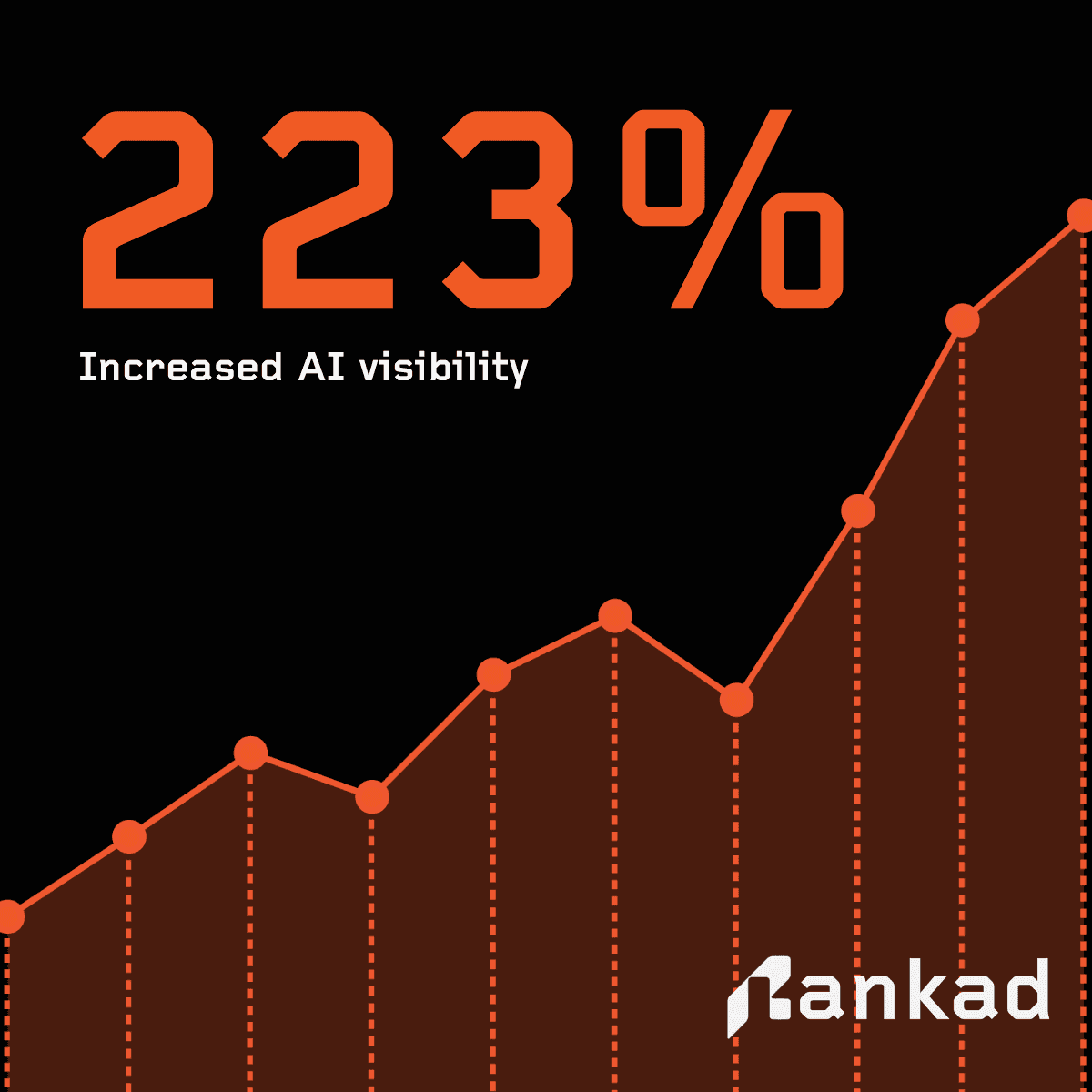
AI Search Optimization: How Rankad Helped 50+ Brands Achieve 223% Visibility Growth in 2026
Rankad.ai analyzed 50+ brands to uncover why most start with zero AI search visibility and how optimization can increase visibility by 223%. Learn actionable strategies for e-commerce, SaaS, and more.

AIO
How AI Chooses Brands: Best Practices for AI Search Optimization
Learn how AI systems decide which brands to mention in answers and recommendations, and how AI SEO, AEO, GEO, and AIO influence visibility.

Digital Marketing
AI SEO vs AEO vs GEO vs AIO: Key Differences and Best Practices for 2026
AI SEO, AEO, GEO, and AIO all impact how brands appear in AI answers. Learn the differences and why modern visibility needs all four.
free forever - no credit card needed