Announcement
Elevate Your Rankings: Actionable AI‑Driven SEO Practices for Modern Marketers
written by:
William gyltman
In today’s fast‑moving digital landscape, marketers are pressured to produce high‑quality content at scale while staying ahead of algorithm updates. AI tools promise speed, but many teams stumble when the technology is applied without a clear process. This guide cuts through the hype, framing the exact challenges you face— from selecting the right AI platform to ensuring the output meets search intent and brand standards. By the end, you’ll have a repeatable workflow that turns AI insights into ranking‑ready assets, ready to plug into your existing content engine.
1. Define the Problem: Where AI Can Actually Add Value
Before you press ‘run’ on any AI model, map the specific bottlenecks in your SEO workflow. For most mid‑size brands, the pain points are (a) keyword discovery that aligns with buyer intent, (b) drafting topic outlines fast enough to meet publishing calendars, and (c) maintaining consistent brand voice across hundreds of pages.
Decision criteria revolve around cost, integration ease, and output quality. A high‑cost, enterprise‑grade model may deliver nuanced language but could stall your timeline if it requires custom APIs. Conversely, a low‑cost SaaS tool may integrate instantly but produce generic copy that needs heavy editing.
Actionable step: Conduct a 30‑minute audit with your SEO and content leads, listing each manual task, the time it consumes, and the desired outcome. Prioritize tasks where AI can shave off at least 30% of effort without sacrificing quality.
What good looks like: A team identifies that “keyword clustering for pillar pages” consumes 8 hours weekly. By adopting an AI clustering tool that auto‑generates semantic groups, the team reduces that task to 2 hours, freeing resources for content promotion.
2. Choose AI Tools Based on Transparent Scoring Frameworks
Not all AI platforms are built equal. Build a scoring matrix that rates each candidate on four pillars: (a) data freshness (does the tool pull real‑time SERP data?), (b) customization (can you feed brand guidelines?), (c) output auditability (does it provide source citations?), and (d) integration (does it plug into your CMS or workflow tools?).
Trade‑offs often appear between depth and speed. A model trained on a massive corpus may surface niche long‑tail keywords, but its API latency could delay publishing. Meanwhile, a lightweight keyword generator may be instant but miss emerging trends.
Implementation guidance: Run a 2‑week pilot with the top two tools, using a single content silo as the test bed. Track metrics such as time‑to‑first‑draft, number of revisions, and SERP visibility after publishing. Score each tool against your matrix and select the one that meets a minimum threshold of 75% across all pillars.
What good looks like: After scoring, a brand selects “KeywordAI Pro” because it scores 85% on data freshness, 80% on customization (it accepts a JSON of brand tone guidelines), 70% on auditability, and 90% on integration (direct Zapier webhook to the CMS). The pilot shows a 40% reduction in drafting time and a 12% uplift in click‑through rates after launch.
3. Embed AI Into a Structured Content Creation Workflow
A chaotic hand‑off between AI and writers leads to rework. Design a step‑by‑step pipeline: (1) Intent Mapping – use AI to pull top SERP questions and map them to buyer stages; (2) Outline Generation – prompt the model with the intent map and brand voice JSON; (3) Draft Production – let AI write sections, but flag any paragraph that exceeds a 20‑sentence length for human review; (4) Quality Gate – run the draft through an AI‑powered SEO audit (e.g., on‑page factor checker) and a brand‑voice classifier; (5) Publish & Tag – automatically push the final HTML to the CMS with meta tags pre‑filled.
Decision criteria include the level of human oversight required and the ability to track each stage’s output. Over‑automation can erode E‑E‑A‑T, while under‑automation defeats the purpose of speed.
Action steps: Create a shared Google Sheet that logs each piece of content, the AI prompts used, and the reviewer’s checklist items. Set up Zapier or Make.com automations that trigger the next stage once the previous one is marked complete.
What good looks like: A tech blog uses this pipeline for weekly posts. The intent mapping takes 10 minutes, outline generation 5 minutes, AI draft 15 minutes, and human QA 20 minutes. Total production time drops from 2 hours to 50 minutes, and the final articles consistently rank on page 1 for target keywords.
4. Optimize AI‑Generated Copy for Search Intent and E‑E‑A‑T
AI excels at pattern replication but can miss nuanced intent signals. After the draft, run a manual intent verification: compare the top three SERP snippets for your target keyword with the AI’s headings and sub‑headings. Adjust any misaligned sections to directly answer the user’s question.
Trade‑offs involve time versus precision. A quick publish may capture traffic fast, but mismatched intent can increase bounce rates and hurt rankings. Investing an extra 10‑15 minutes per piece to align with user intent typically improves dwell time.
Implementation guidance: Use a checklist that includes (a) presence of a clear answer within the first 150 words, (b) inclusion of at least one authoritative citation (link to a reputable source), (c) author bio with credentials, and (d) schema markup for FAQ or How‑To where applicable. Leverage AI tools that suggest citations, but verify each source manually.
What good looks like: An e‑commerce brand publishes an AI‑generated guide on “Sustainable Packaging Options.” After intent alignment, the guide adds a concise answer box, cites two industry reports, includes the author’s sustainability certification, and embeds FAQ schema. The page sees a 30% increase in average session duration and earns a featured snippet within two weeks.
5. Measure, Iterate, and Scale with Data‑Driven KPIs
The final piece of the puzzle is a feedback loop. Define clear KPIs: (a) Time‑to‑publish, (b) Organic traffic lift (30‑day vs. baseline), (c) SERP position for primary keyword, (d) Engagement metrics (bounce, dwell time), and (e) Content revision rate (how many drafts needed).
Decision criteria revolve around which KPI signals success versus a need for adjustment. If time‑to‑publish drops but traffic stagnates, the AI output may lack depth. Conversely, high traffic with many revisions indicates the model is producing useful ideas but requires heavy editing.
Actionable steps: Set up a dashboard in Google Data Studio or Looker that pulls data from Search Console, Google Analytics, and your CMS. Review the dashboard weekly, flagging any KPI that deviates more than 15% from target. When a deviation occurs, revisit the relevant workflow stage—intent verification, prompt engineering, or tool selection.
What good looks like: After three months, a SaaS company’s AI‑driven blog sees a 25% reduction in time‑to‑publish, a 18% increase in organic sessions, and a 10% drop in revision rate. The dashboard alerts the team to a rising bounce rate on a specific series, prompting a quick audit that reveals missing FAQs. Adding those FAQs restores the bounce metric to the target range.
AI is not a magic wand; it’s a catalyst that amplifies a disciplined SEO process. By first pinpointing where human effort is most costly, scoring tools against transparent criteria, and weaving AI into a structured workflow, you turn raw model output into search‑engine‑ready assets. Aligning every piece of AI‑generated copy with true user intent and E‑E‑A‑T safeguards rankings, while a data‑backed feedback loop ensures continuous improvement. Implement these practices now, and you’ll see faster content cycles, higher organic visibility, and a measurable ROI on your AI investment.
Remember, the goal isn’t to replace your team but to empower them with smarter tools that let them focus on strategy, creativity, and authority building— the very elements that search engines reward.
You might want to read
AIO
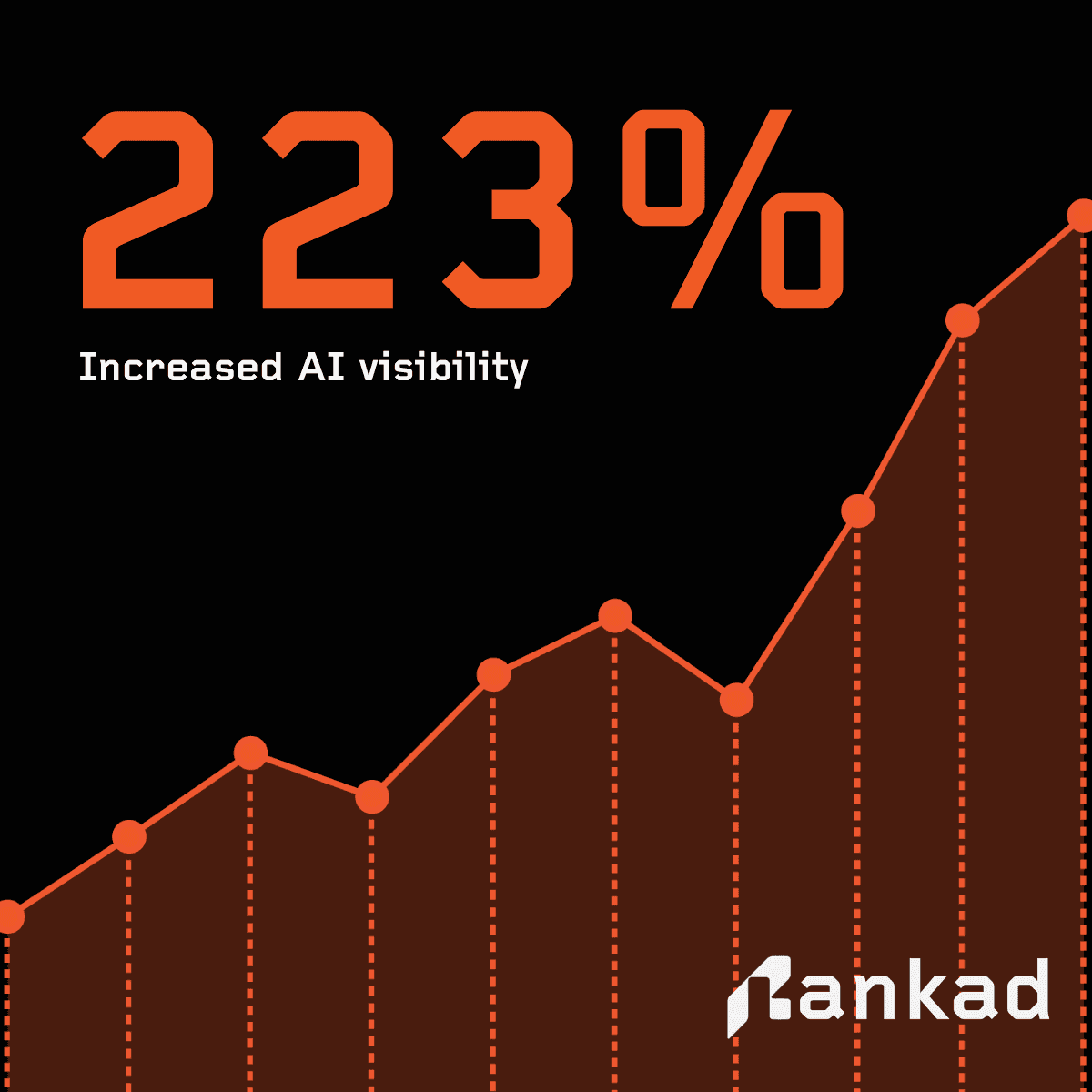
AI Search Optimization: How Rankad Helped 50+ Brands Achieve 223% Visibility Growth in 2026
Rankad.ai analyzed 50+ brands to uncover why most start with zero AI search visibility and how optimization can increase visibility by 223%. Learn actionable strategies for e-commerce, SaaS, and more.

AIO
How AI Chooses Brands: Best Practices for AI Search Optimization
Learn how AI systems decide which brands to mention in answers and recommendations, and how AI SEO, AEO, GEO, and AIO influence visibility.

Digital Marketing
AI SEO vs AEO vs GEO vs AIO: Key Differences and Best Practices for 2026
AI SEO, AEO, GEO, and AIO all impact how brands appear in AI answers. Learn the differences and why modern visibility needs all four.
free forever - no credit card needed